
Rockwool vs Glasswool in Nepal: Which Insulation Fits Your Project?
Compare rockwool and glasswool for thermal comfort, acoustics, fire-sensitive assemblies, weight, handling and typical wall, roof and ceiling applications.
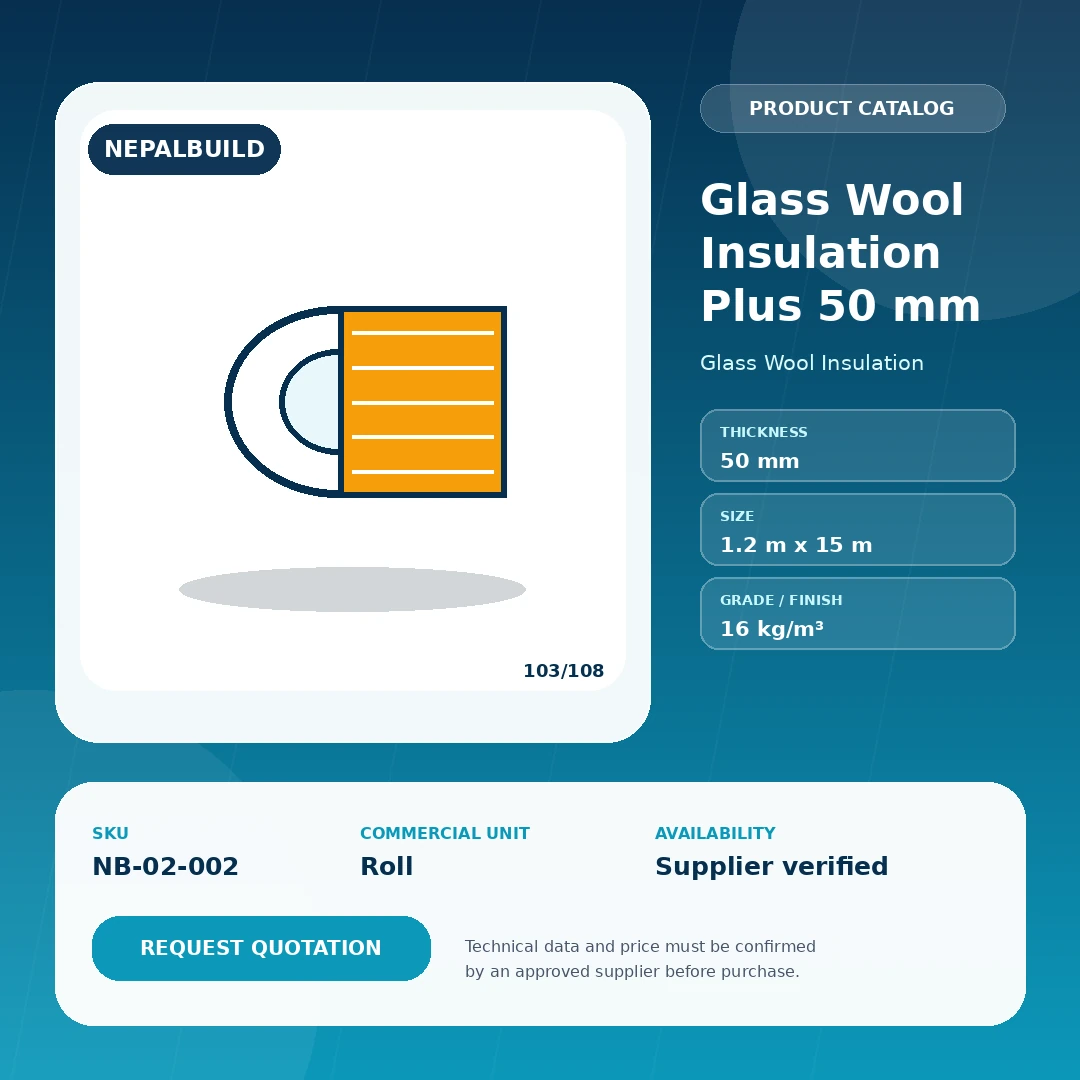
Rockwool and glasswool are both fibrous insulation materials, but they are not interchangeable in every detail. Product density, facing, thickness and assembly design matter more than a simple winner-versus-loser comparison. Choose according to the project requirement and the way the insulation will be supported.
Thermal performance
Both material families are available in products designed for building insulation. Compare declared thermal conductivity and installed thickness for the exact product instead of judging only by material name.
Installation gaps and compression can reduce the benefit of either option.
Acoustic behaviour
Fibrous insulation can absorb sound energy inside wall and ceiling cavities. Denser stone-wool products are often selected for robust acoustic partitions, while glasswool can also perform effectively in lightweight systems.
The wall boards, framing and airtightness still dominate overall sound isolation.
Fire-sensitive assemblies
Stone wool is commonly used where non-combustible insulation is required, but fire resistance must be verified for the complete tested or engineered system.
Do not assume that adding insulation alone creates a fire-rated wall or ceiling.
Weight and handling
Glasswool products are often lightweight and compressible for transport. Rockwool slabs can be stiffer and heavier, which may make them easier to friction-fit in some partitions.
Handling method, support and worker protection should follow the product guidance.
Moisture and enclosure
Neither material replaces the wall or roof’s waterproofing system. Keep insulation dry during construction and manage condensation with suitable air, vapour and weather-control layers.
Wet substrates should be repaired before insulation is enclosed.
Cost should follow performance
Compare cost per square metre at the required thickness and density, including support, facing, labour and accessories.
The cheapest roll may not be the lowest-cost solution if the assembly needs a different product form or additional support.
Practical project checklist
- Compare exact product data sheets.
- Match thickness to the design target.
- Check assembly fire and acoustic requirements.
- Plan support, facing and moisture control.
- Compare installed cost per square metre.
Questions to ask before you buy
- Which is better for soundproofing?
- Which is better for fire resistance?
- Can I use the same thickness for every room?
Final takeaway
Choose between rockwool and glasswool by product data and assembly requirements. Correct thickness, continuity and detailing usually matter more than the generic material label.
Need a project-specific recommendation? Send NepalBuild your quantities, location and delivery timeline on WhatsApp at +977 970 3036403. We can help you compare materials, specifications and quotation options before ordering.
Need current product prices or a project quotation?
Send your quantities, location and required delivery date. NepalBuild will help structure a comparable supplier enquiry.
Related construction guides
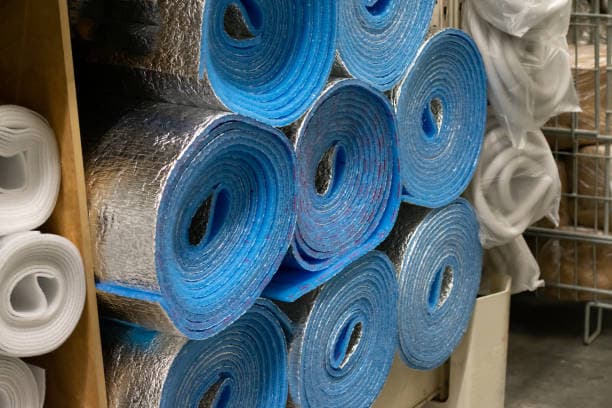
Insulation and Condensation in Nepal: What Builders Should Coordinate
Understand why condensation forms and how insulation, ventilation, air leakage and vapour control should be coordinated in walls and roofs.
Top 10 Best Thermal Insulation Materials for Energy-Efficient Buildings in Nepal
Compare thermal insulation for roofs, walls, ceilings, HVAC ducts and cold regions in Nepal.
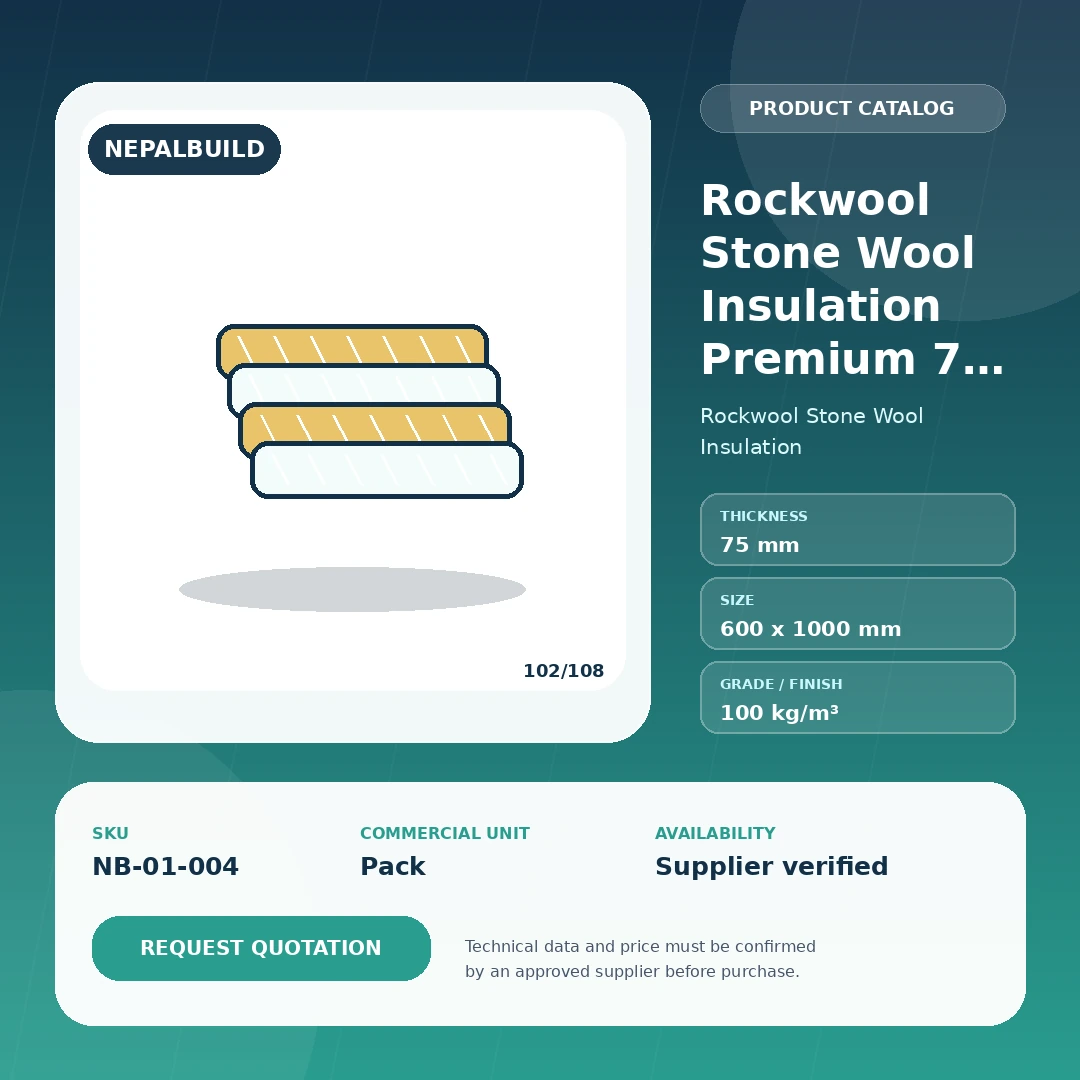
Rockwool Insulation in Nepal: Thermal, Fire and Acoustic Guide
Use rockwool effectively in walls, roofs, ceilings and acoustic systems with guidance on density, thickness, fire performance, moisture and installation.